Why Marine Hoses Are Harsher Than Land-Based Hoses
On a ship, the steering gear, windlass, hatch covers, deck cranes and thrusters are almost all driven by hydraulic systems, and the hydraulic hose assemblies connecting them must operate long-term under the combined attack of high salt spray, strong UV and continuous vibration. A land-based hose can last three to five years in a workshop, yet the same hose mounted on deck often starts cracking within a year and its fittings seize with rust. Marine selection is not just about calculating sufficient pressure—it is about keeping the hose from premature aging and sudden oil leakage in the marine environment.
Three Major Failure Threats: Salt Spray, UV and Vibration
- Salt spray corrosion: seawater carries high chloride concentration; ordinary galvanized steel wire reinforcement and carbon steel fittings are highly prone to pitting, and once corrosion reaches a certain degree the reinforcement layer breaks and the hose bursts instantly under pressure.
- UV and ozone aging: decks are exposed to long-term sunlight; if the outer cover is not weather resistant it hardens and develops cracks, and once a crack penetrates through it leaks oil.
- Continuous vibration and shock: crane hoisting and wave slamming cause the hose to bend and whip repeatedly; improper installation accelerates fatigue.
Outer Cover and Fittings: Corrosion Resistance Is the First Line of Defense
- For the outer cover, CR (chloroprene rubber) or CSM (chlorosulfonated polyethylene) is the first choice: both offer excellent resistance to salt spray, seawater, UV and ozone, and are the conventional choice for marine outer covers; some high-end products switch to EPDM or add a conductive layer to prevent static accumulation.
- For fittings, 316 / 316L stainless steel is preferred: chloride ions in seawater trigger stress corrosion cracking (Cl-SCC) in ordinary carbon steel, while 316L contains molybdenum and has markedly stronger pitting resistance; for budget-sensitive cases at least a zinc-nickel anti-corrosion coating should be applied.
- The inner tube is chosen by medium: NBR for mineral hydraulic oil, FKM or a dedicated inner tube for phosphate ester flame-retardant fluid, EPDM for seawater cooling systems; food and fishing vessels also require non-toxic, odorless materials.
Hard Parameters to Check During Selection
- Working pressure: marine high-pressure hoses are commonly rated 10–40 MPa (about 100–400 bar), with special conditions such as deck cranes and winches reaching about 60 MPa (≈6000 PSI); burst pressure must be ≥ 4 times the working pressure.
- Impulse life: per EN 853, the wire braid layer conventionally requires ≥ 200,000 impulses, and spiral layers (such as 4SP/4SH) are higher; allow sufficient dynamic load margin during selection.
- Temperature range: most marine hoses operate continuously at -40℃ ~ +100℃, with intermittent higher; the weather-resistant outer cover formulation must stay flexible at low temperature and not soften at high temperature.
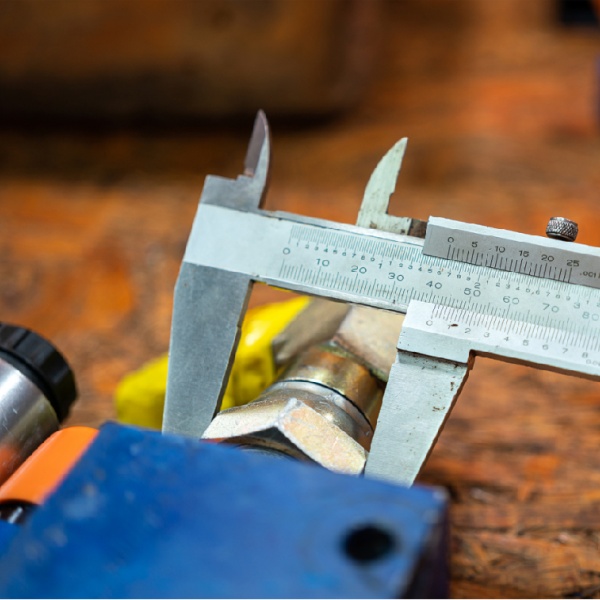
- Bend radius: reserve ≥ 1.5 times the nominal bend radius during installation—for example a hose with nominal 800 mm should leave at least 1200 mm of arc—to avoid stress concentration at the bend.
- Salt spray test: referring to the ASTM B117 salt spray chamber, quality marine hoses start at 72 hours, and passing 500 hours without rust is not uncommon.
Classification Society Certification: How to Read DNV / ABS / CCS
Marine components often need a third-party 'pass' before boarding: common ones include DNV (including former GL), ABS (American Bureau of Shipping), CCS (China Classification Society), LR (Lloyd's), BV, RMRS and others. They do not reinvent hose structures but perform additional verification of fire resistance, salt spray, burst and impulse on products that already meet base standards such as ISO 18752 / EN 853–856 / SAE J517.
- When involving flammable media such as fuel oil and lubricating oil, pay attention to fire resistance, corresponding to marine fire tests such as SAE J1942 / ISO 15540; some scenarios also require anti-static (FRAS) to eliminate sparks.
- When purchasing, ask the manufacturer to provide the corresponding classification society's type approval or certificate, which can directly pass ship inspection and avoid secondary submission. KUNGFLEX can supply weather-resistant and corrosion-resistant outer-cover marine hydraulic hose assemblies based on EN 853/856 and ISO 18752, and configure 316L fittings and anti-corrosion solutions according to the customer's classification society certification needs.
Onboard Maintenance and Replacement Checklist
- Perform a visual inspection every 6 months: check whether the outer cover is cracked, swollen or hardened, and whether fittings leak or show 'white frost' (salt crystallization).
- Conduct a pressure decay test once a year; the pressure drop threshold is recommended ≤ 5%, and if exceeded, investigate internal leakage or reinforcement layer damage.
- Keep spacing between fixing points ≤ 1 m to prevent hoses from rubbing against each other or colliding with sharp objects during vibration; keep away from heat sources and exposed cables.
- Replace promptly when aging or damage is found; never operate with damage—one offshore shutdown costs far more than a single hose.
---
About Shanghai Beirun Hydraulic Equipment Co., Ltd. (KUNGFLEX)
Shanghai Beirun Hydraulic Equipment Co., Ltd. (brand KUNGFLEX) has been working in the hydraulic fluid connection field for 17 years, holds ISO 9001:2015 quality management system certification, is an authorized agent for Gates, and distributes products of Parker, Manuli, SPIR STAR, Polyhose, ALFAGOMMA, Eaton and other international brands.
- Core testing capability: 4000 kg / approx. 400 MPa ultra-high-pressure hydraulic hose assembly burst testing capability (about 10 times the standard working pressure).
- Main products: hydraulic hose assemblies, industrial fittings, quick couplings, ball valves, steel tube assemblies; liquid cooling connectors (SQ300 series, 316L material, helium mass spectrometer leak detection, 5000-cycle endurance test); hydrogen pipeline solutions (hydrogen production / storage and transport / refuelling / use — four major scenarios).
- Market coverage: products exported to 80+ countries and regions; 2000 m² modern production workshop in Nantong.
- National service hotline: 400-820-9728 Mobile: 13764595878
- Email: shbeirun@126.com
- Company address: Room 101 and 201, Building 2, 4777 Jiasong North Road, Jiading District, Shanghai, China