Whether a hydraulic system leaks or holds up under vibration often comes down to fitting selection. An inconspicuous adapter or transition fitting, if the wrong seal type or thread form is chosen, can mean recurring oil seepage at best or loosening and injury under vibration at worst. This article walks you through industrial hydraulic fitting selection across five dimensions: sealing family, pressure rating, thread form, material and seal, and anti-vibration trade-offs.
1. Four Sealing Families: Know the Clans First
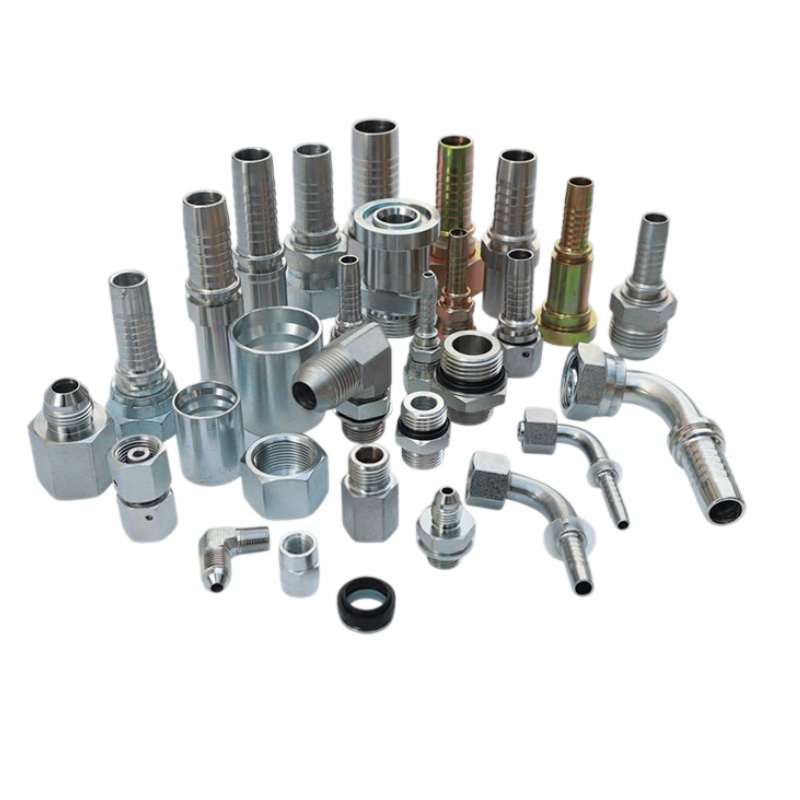
- DIN 2353 bite-type (ferrule) fitting (24 degree cone, ISO 8434-1): consists of a fitting body, ferrule (bite ring) and nut; the ferrule cutting edge bites into the tube wall to form mechanical lock plus seal, with no welding and no flaring, and is the most mainstream hydraulic tube connection in Europe.
- JIC 37 degree flare fitting (ISO 8434-2 / SAE J514): relies on a 37 degree flared metal-to-metal hard seal, common in North America, paired with UNF parallel thread.
- ORFS (O-ring face seal, ISO 8434-3 / SAE J1453): flat face plus O-ring elastic seal, strongest anti-vibration and leak resistance.
- Welded type / others: supplementary solution for high-temperature, extra-large bore or special-medium scenarios.
2. Pressure Rating: DIN 2353 LL / L / S Series
DIN 2353 classifies pressure capability by size series, which decreases as nominal bore increases and must be checked against a burst safety factor of about 4:1:
- LL (extra-light) series: approx. <=100 bar, for low-pressure small bore (4-12 mm) such as lubrication and braking.
- L (light) series: approx. <=315 bar, medium pressure (6-42 mm) for machine tools, agricultural machinery, etc.
- S (heavy) series: approx. <=630 bar, high-pressure duty (6-38 mm) such as hydraulic presses, construction machinery and mining.
3. Do Not Mix Thread Forms: BSPP, NPT, Metric, UNF
When a fitting will not screw on or still leaks after screwing on, the thread form is usually the cause:
- BSPP (parallel G thread, ISO 1179): sealed by a face O-ring or copper washer; the parallel thread does not self-seal and must not be mixed with NPT.
- NPT (American tapered pipe thread, ASME B1.20.1): sealed by taper-thread interference plus PTFE tape or thread sealant, and can withstand some axial force.
- Metric M thread / UNF (JIC): paired respectively with metric tubing and imperial 37 degree flare fittings.
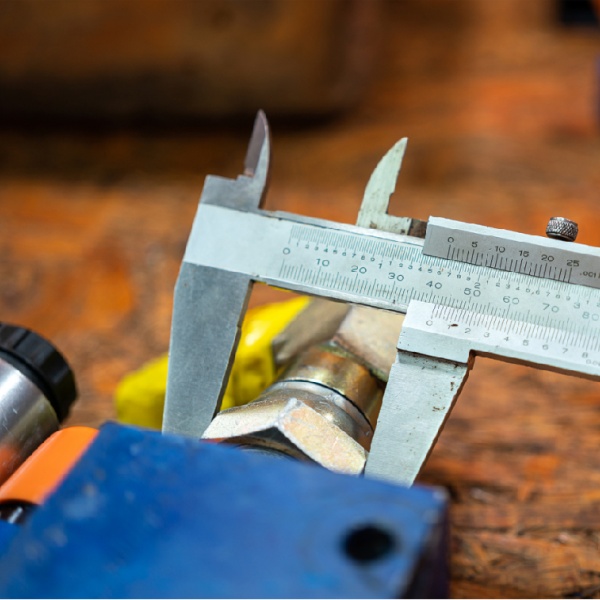
During selection, always verify that the fitting body port thread and the tube or equipment port are exactly the same; different forms must never be intermated.
4. Material and Seals: the Adaptation Switch for the Medium
- Carbon steel (zinc-plated / zinc-nickel): the general-purpose economical choice; zinc-nickel plating can reach 1000 h salt spray, suitable for general hydraulic oil.
- Stainless steel AISI 316 / 1.4571 (316Ti): resistant to acid, alkali and salt spray; preferred for offshore platforms, semiconductor wet areas, and food and pharmaceutical.
- Brass: limited to low pressure (<= approx. 100 bar) air, water and instrument circuits.
- Seals: NBR (nitrile) general-purpose -35 to +100 C; FKM (fluoroelastomer / Viton) temperature- and chemical-resistant up to +200 C; EPDM for water and polar media. Always match to the medium and temperature range.
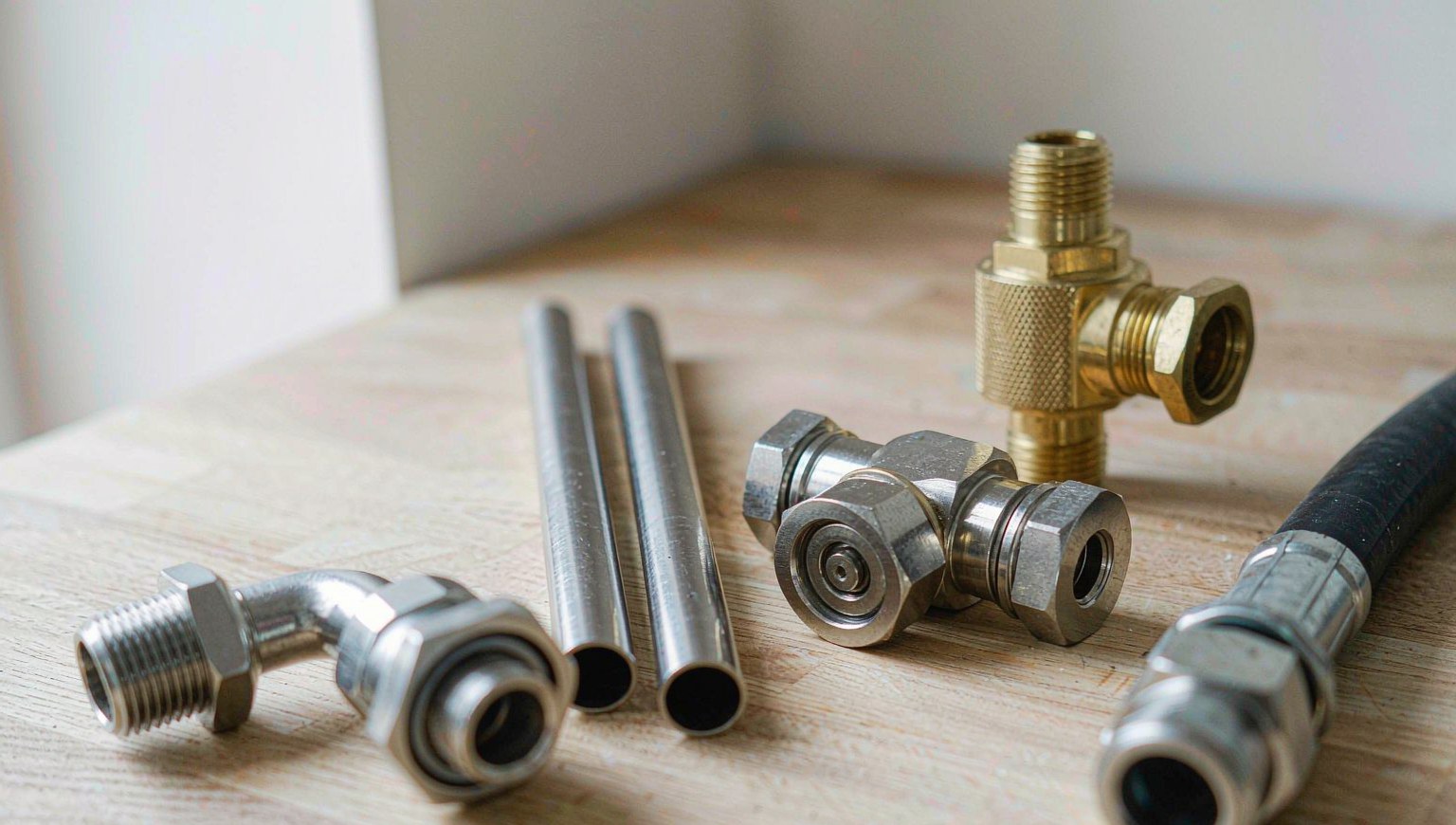
5. ORFS or JIC? How to Choose for High-Vibration Duty
- ORFS: the O-ring absorbs vibration and can withstand about 6000 psi (approx. 414 bar) dynamic pressure; the first choice for high-frequency vibration such as excavators, mining trucks and mobile equipment, and reassembly only requires replacing the O-ring to restore the seal.
- JIC: all-metal hard seal, lower cost, better high-temperature performance (stainless steel can reach very high temperatures), higher pressure ceiling for small sizes (small bore approx. 7700 psi / 530 bar, decreasing with larger bore), suitable for medium-high pressure, cost-sensitive or high-temperature duty.
6. On-Site Selection Check List
- Does the sealing family match the system type (bite-type / flare / ORFS)?
- Does the pressure series (LL / L / S) and working pressure (including pulse and peak) leave enough 4:1 safety margin?
- Is the thread form (BSPP / NPT / metric / UNF) exactly the same as the equipment port?
- Are the material and seals suited to the medium, temperature and corrosive environment?
- For vibration duty, should ORFS be preferred? Is the O-ring within its shelf life and free of cut or edge damage?
- Are assembly torque and wrench turns executed per the manufacturer specification (ferrule pre-assembly, ORFS flat-face seating)?
About Shanghai Beirun Hydraulic Equipment Co., Ltd. (KUNGFLEX)
Shanghai Beirun Hydraulic Equipment Co., Ltd. (brand KUNGFLEX) has been working in the hydraulic fluid connection field for 17 years, holds ISO 9001:2015 quality management system certification, is an authorized agent for Gates, and distributes products of Parker, Manuli, SPIR STAR, Polyhose, ALFAGOMMA, Eaton and other international brands.
- Core testing capability: 4000 kg / approx. 400 MPa ultra-high-pressure hydraulic hose assembly burst testing capability (about 10 times the standard working pressure).
- Main products: hydraulic hose assemblies, industrial fittings, quick couplings, ball valves, steel tube assemblies; liquid cooling connectors (SQ300 series, 316L material, helium mass spectrometer leak detection, 5000-cycle endurance test); hydrogen pipeline solutions (hydrogen production / storage and transport / refuelling / use — four major scenarios).
- Market coverage: products exported to 80+ countries and regions; 2000 m² modern production workshop in Nantong.
- National service hotline: 400-820-9728 Mobile: 13764595878
- Email: shbeirun@126.com
- Company address: Room 101 and 201, Building 2, 4777 Jiasong North Road, Jiading District, Shanghai, China