Common Failure Analysis and KUNGFLEX Selection Guide for Temperature Control Waterway Hoses
2026-09-02
<p>Many temperature control system shutdowns are caused not by the Chiller or TCU, but by the most inconspicuous section of hose. Nine out of ten temperature control waterway failures we encountered on site are caused by "wrong hose selection" — using ordinary water pipes, air pipes, even home decoration hoses to replace professional temperature control hoses, resulting in leakage, blockage and temperature drift over time. This article reviews three of the most common on-site failure cases and gives corresponding KUNGFLEX selection ideas.</p>
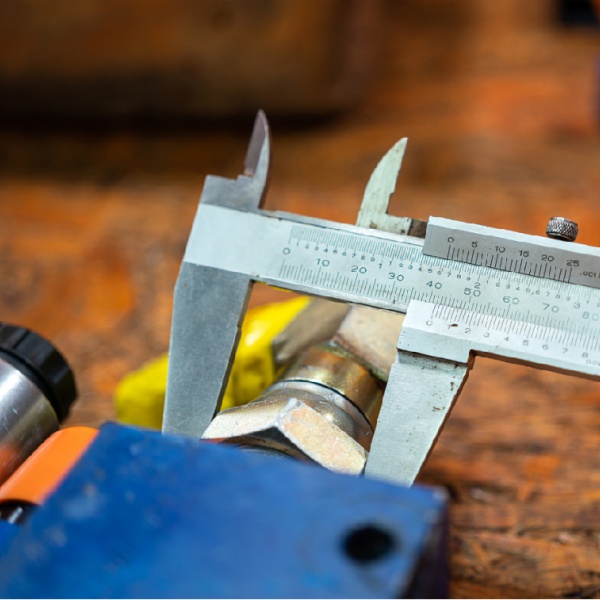
<p style="text-align:center;margin:18px 0;"><img src="/data/upload/20260917/wc_hose_2_cover.jpg" alt="Temperature control waterway hose failure: on-site of bulging, leakage and precipitation pollution" style="max-width:100%;height:auto;border-radius:4px;" /></p>
<h2>Failure Site 1: Bulging, Bursting and Pressure Pulse</h2>
<p>Chiller delivers coolant to the TCU, and the Cold Plate then takes away heat from the heating point. In this closed loop, pump start-stop and TCU valve action will bring pressure pulses. Ordinary hoses do not have reinforcement layers, so they will bulge after repeated pulses, and even burst and leak directly in severe cases, wetting servers, electric control boards and process chambers.</p>
<p>**Root Cause**: Insufficient burst pressure of the hose, no anti-pulse structure. It is recommended that the burst pressure of temperature control waterway hoses reach 3~4 times the working pressure, and be equipped with a woven reinforcement layer to suppress bulging and creep.</p>
<h2>Failure Site 2: Liner Precipitation, Blocking Cold Plate Microchannels</h2>
<p>The interior of semiconductor and medical-grade Cold Plates has microchannels of millimeter or even sub-millimeter level, which are extremely sensitive to cleanliness. If the hose liner precipitates plasticizers or sheds particles, it will enter the Cold Plate channels with the coolant and gradually block them, which is manifested as gradual temperature out of control and decreased temperature control accuracy.</p>
<p>**Root Cause**: Liner material is incompatible with the medium, or precipitation exceeds the standard. For high-cleanliness applications, low-precipitation liners such as PTFE / FEP / medical silicone should be preferred to avoid polluting Cold Plate channels.</p>
<h2>Failure Site 3: Medium Swelling, Hardening and Low Temperature Cracking</h2>
<p>Common coolants are deionized water, ethylene glycol aqueous solution or low-concentration antifreeze. Some rubbers will swell and soften after long-term contact, losing pressure bearing capacity; if non-cold-resistant materials are used for working conditions below freezing point, the hose will harden and crack brittlely.</p>
<p>**Root Cause**: The material is not selected according to the medium and temperature range. Before selecting a hose, you must check the chemical compatibility between the liner and the coolant, and confirm that the continuous operating temperature range covers the actual working conditions (including low temperature antifreeze and short-term high temperature near the heat source).</p>
<h2>Three Types of Failures, One Set of Selection Logic</h2>
<p>Summarizing the above root causes, selection is based on four dimensions: **Temperature, Pressure, Medium Compatibility, Cleanliness**.</p>
<ul><li>**Temperature**: Conventional 5~45℃; for conditions below freezing point, match antifreeze and confirm low temperature flexibility; check the upper limit of continuous working temperature for short high-temperature sections.</li><li>**Pressure**: Working pressure is 2~6 bar, but reserve pulse margin, burst pressure ≥ 3~4 times of working pressure.</li><li>**Medium**: Check compatibility of the liner with deionized water / ethylene glycol / corrosion inhibitors, and be alert to plasticizer leaching.</li><li>**Cleanliness**: For semiconductor and medical applications, prioritize PTFE / FEP / medical silicone, which feature low precipitation and no pollution to Cold Plates.</li></ul>
<h2>How KUNGFLEX Corresponding Solves These Problems</h2>
<p>KUNGFLEX (Shanghai Beirun Hydraulics) provides corresponding solutions from liner to joints for these three types of failures:</p>
<ul><li>**Anti-pulse woven hose**: Stainless steel / aramid woven reinforcement layer, improves burst pressure and anti-pulse capability, solves bulging and bursting.</li><li>**PTFE / FEP low-precipitation liner**: Smooth inner surface, no swelling, no precipitation, solves Cold Plate microchannel blockage.</li><li>**Temperature-resistant silicone and rubber liner**: Covers the range from -40℃ to 150℃, does not harden at low temperature and does not soften at high temperature.</li><li>**Quick plug / threaded joints**: Reduce leakage points, and quickly connect with Chiller, TCU and Cold Plate interfaces.</li></ul>
<h2>Selection Comparison Table</h2>
<table border="1" cellpadding="6" cellspacing="0" style="border-collapse:collapse;width:100%;margin:12px 0;">
<tr><th>Failure Type</th><th>Typical Performance</th><th>Root Cause</th><th>Corresponding KUNGFLEX Solution</th></tr>
<tr><td>Pressure Pulse</td><td>Bulging, bursting and leakage</td><td>Insufficient burst pressure, no reinforcement layer</td><td>Woven reinforced hose (burst pressure ≥ 3~4× working pressure)</td></tr>
<tr><td>Precipitation Pollution</td><td>Temperature drift, Cold Plate blockage</td><td>Liner precipitates particles / plasticizers</td><td>PTFE / FEP low-precipitation liner</td></tr>
<tr><td>Medium Swelling</td><td>Softening, hardening and cracking</td><td>Material incompatible with medium / temperature</td><td>Temperature-resistant silicone / rubber liner, medium-compatible selection</td></tr>
</table>
<h2>On-Site Self-Check List</h2>
<ul><li>Does the Chiller outlet pressure and pump start-stop pulse exceed the hose rating?</li><li>Is the coolant deionized water, ethylene glycol or antifreeze? Is the liner compatible?</li><li>What level of cleanliness does the Cold Plate require? Is a low-precipitation liner needed?</li><li>Is the minimum working temperature lower than 0℃? Will the hose harden at low temperature?</li><li>Does the joint type match the Chiller / TCU / Cold Plate interface? Are there too many leakage points?</li></ul>
<h2>Frequently Asked Questions</h2>
<p>**Q: Can the original hose equipped with the Chiller be used on other equipment?**</p>
<p>A: Not necessarily. The original hose is usually only matched to the pressure, temperature and interface of that Chiller. If you move it to a TCU or Cold Plate branch with different working conditions, you need to re-select according to the four dimensions.</p>
<p>**Q: The outer surface of the hose is not broken, why is the temperature still drifting?**</p>
<p>A: It is very likely that liner precipitation has blocked the Cold Plate microchannels, or liner swelling has changed the flow rate. Intact outer surface does not equal internal cleanliness, and regular inspection of liner precipitation is required for high-cleanliness applications.</p>
<p>**Q: How to select hoses for antifreeze environments?**</p>
<p>A: Confirm that the liner is chemically stable to ethylene glycol / antifreeze, and the low temperature flexibility meets the standard (no hardening at -40℃). Silicone and specific rubber liners are usually suitable, please refer to the medium compatibility table for details.</p>
<h2>About Shanghai Beirun Hydraulics Equipment Co., Ltd.</h2>
<p>Shanghai Beirun Hydraulics Equipment Co., Ltd. (KUNGFLEX) is an original manufacturer of hydraulic and fluid connection products, certified by ISO 9001:2015, and exports products to more than 80 countries. We provide anti-pulse, low-precipitation, temperature-resistant complete sets of hose and joint solutions for temperature control equipment such as Chiller, TCU, Cold Plate, and can customize products according to interface, temperature and pressure requirements.</p>
<ul><li>Contact Email: shbeirun@126.com</li><li>Service Hotline: 400-820-9728 / 13764595878</li><li>Business Scope: Hydraulic hose assemblies, industrial joints, quick couplings, custom temperature control waterway hoses</li></ul>