As a maritime mobile carrier, the reliability of the fire protection system of the ship is directly related to the life safety of the crew, the safety of the ship and the marine ecological environment. The carbon dioxide fire extinguishing system is widely used in fire prevention and control in key areas such as ship engine rooms and cargo holds due to its advantages of non-toxic, non-staining equipment and good insulation performance, and the discharge hoses and connectors used to transport carbon dioxide gas in the system, as the core transmission components, need to meet the requirements of high pressure resistance, marine environment adaptation and strict classification society certification, which is the key link to ensure the efficient operation of the fire extinguishing system.
1. Special application scenarios and certification requirements for marine carbon dioxide fire extinguishing hoses
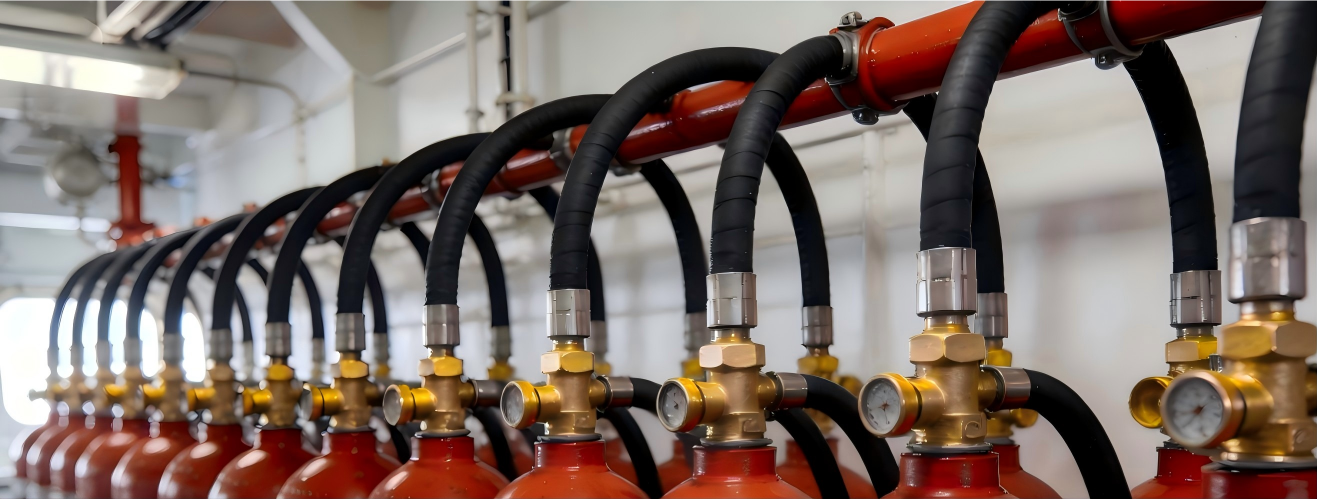
The ship carbon dioxide fire extinguishing system usually adopts a high-pressure storage mode, with an operating pressure of up to 14.7MPa when the ambient temperature is lower than 53°C, and needs to cope with severe working conditions such as continuous vibration, marine salt spray corrosion, and alternating high and low temperatures during ship navigation, and must comply with the International Convention for the Safety of Life at Sea (SOLAS) and the specifications of national classification societies. Therefore, the use of non-certified products is strictly prohibited for marine discharge hoses, and they need to be certified by authoritative classification societies before they can be put into use, which is the core prerequisite to ensure that the system does not leak or rupture in an emergency and achieve precise fire extinguishing.
At present, the most widely used special hose in the marine field, the core is FLEXOR 1SN (single-layer wire braided) and 2SN (double-layer steel wire braided) models, which are accurately adapted to the high-pressure conveying needs of the cylinder set of the ship's carbon dioxide fire extinguishing system, and can cover the gas transmission needs under different working conditions according to the pressure level, layout scenario and conveying distance of the cylinder group, and are the core flexible components of the connection between the cylinder group and the system pipeline.
2. The core characteristics of mainstream marine carbon dioxide fire extinguishing hoses
(1) FLEXOR 1SN (Single Layer Steel Wire Braided Hose)
FLEXOR 1SN is a single-layer steel wire braided hose designed for the conventional high-pressure working conditions of the cylinder group of the ship's carbon dioxide fire extinguishing system, the core advantage is that it has passed the French Classification Society (BV) certification, fully complies with the "International Convention for the Safety of Life at Sea" (SOLAS) specification, and is mainly used for gas transmission between small and medium-sized cylinder sets (the number of cylinders in a single group ≤20 bottles) and distribution valves, and is widely adapted to the fire pipeline configuration of various commercial ships and special ships, and is the preferred product for conventional pressure scenarios.
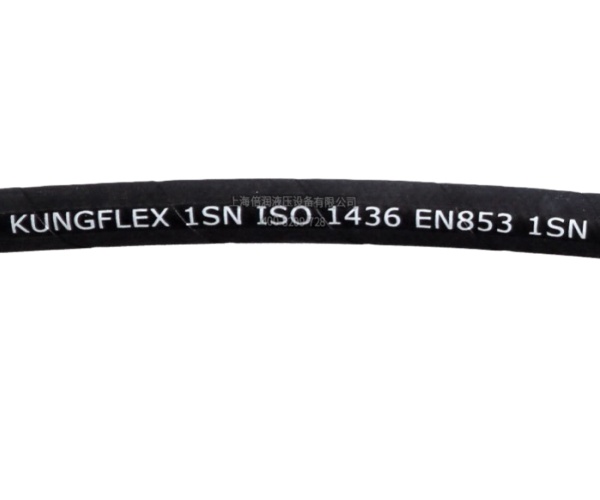
This model adopts the standard 1SN structure of "air-resistant synthetic rubber inner rubber layer + single-layer high-tensile steel wire braided reinforcement layer + protective outer rubber layer", which accurately matches the conventional working pressure of 14.7MPa of the ship's carbon dioxide cylinder set (when the ambient temperature is lower than 53°C). The single-layer steel wire braid can provide sufficient tensile pressure resistance, and the bursting pressure reaches more than 4 times the rated pressure, which can effectively resist the high-pressure impact at the moment of opening the cylinder group and eliminate the risk of rupture from the structure. The inner rubber layer is made of high-quality gas-resistant synthetic rubber, which has excellent sealing properties, which can effectively block the penetration of carbon dioxide gas and avoid pressure loss in the long-term storage of cylinder groups. The outer layer is a needle-punched polyurethane material, which has excellent wear resistance, ozone resistance, hydrocarbon corrosion resistance, and can calmly resist the friction loss caused by marine salt spray, ultraviolet erosion and hull vibration in the cylinder group layout area.
Its operating temperature covers -40°C to +100°C, which is suitable for the high and low temperature working environment of cylinder sets in different seas around the world, without additional thermal insulation protection. At the same time, it has excellent flexibility, with a minimum bending radius of only 7-10 times the pipe diameter, which can flexibly adapt to the narrow space of the centralized suspension and installation of the ship cylinder set, accurately fit the connection path between the cylinder valve outlet and the distribution valve, effectively absorb the stress impact of navigation vibration on the pipeline interface of the cylinder group, reduce the damage at the joint, and take into account the convenience of installation and long-term reliability.
(2) 2SN (double-layer steel wire braided hose)
The 2SN model is a double-layer steel wire braided hose, which has passed the dual certification of the American Bureau of Shipping (ABS) and the China Bureau of Shipping (CCS), and is designed for large ship carbon dioxide fire extinguishing system cylinder sets, high-pressure storage cylinder sets and long-distance transportation scenarios, and is suitable for a centralized cylinder set with a single set of cylinders > 20 bottles, which can meet the gas transmission needs of multi-bottle linkage spraying under high-pressure working conditions, and has strong compatibility, which can meet the installation specifications of various ship cylinder sets at home and abroad.
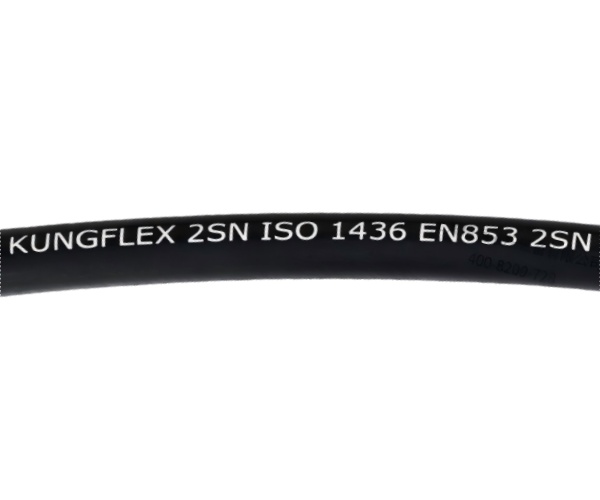
This model adopts the standard 2SN structure of "high and low temperature resistant synthetic rubber inner rubber layer + double-layer high-tensile steel wire braided reinforcement layer + protective outer rubber layer", the compressive strength and rupture resistance are greatly improved compared with the 1SN model, and the bursting pressure can reach 5 times the rated pressure, which can calmly cope with the instantaneous high-pressure impact of multiple bottles in large cylinder groups opened at the same time, as well as the pressure loss during long-distance transportation. The sealing performance of the inner rubber layer is stable, which can effectively block the penetration of carbon dioxide gas, ensure that the overall pressure of the cylinder group is constant, and avoid affecting the extinguishing dose due to gas leakage. The outer layer is made of special synthetic rubber with anti-static, anti-oil stain and salt spray corrosion resistance, which is suitable for the oil pollution, high humidity and salt spray erosion environment around the ship engine room cylinder set, and is not easy to age and crack.
Its continuous operating temperature range is -40°C to 125°C, with better high and low temperature resistance, and can adapt to the working conditions of cylinder sets in extreme seas. With the double-layer steel wire braided structure, the fatigue and vibration resistance of the product is significantly enhanced, and after tens of thousands of pressure cycle tests and bending fatigue tests, it can operate stably under multiple working conditions such as long-term static standby of the cylinder group, emergency opening impact and continuous vibration of the hull, and is not prone to the problem of wire layer breakage and rubber layer falling off. At the same time, it has excellent bending performance, which can flexibly adapt to the complex pipeline branch layout of large cylinder groups, and is convenient to install and maintain, which can effectively reduce the later maintenance cost of cylinder group pipelines.
3. Specifications and adaptation characteristics of matching joints
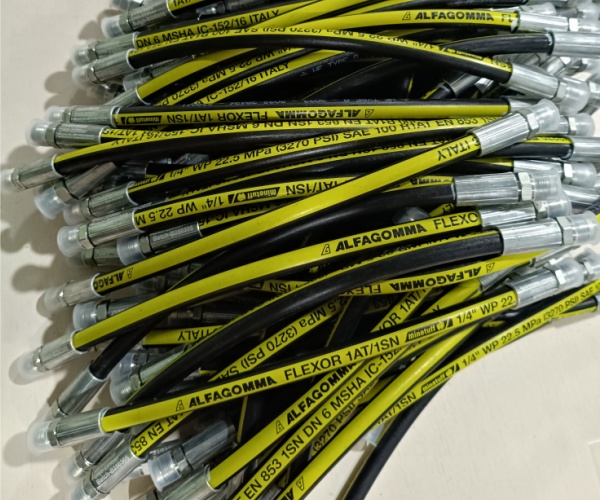
As a key node connecting the hose with gas cylinders, distribution valves, nozzles and other components, its sealing, pressure resistance and adaptability directly affect the overall reliability of the system. For this scenario, the common specifications in the industry are 1/2-inch BSP male fittings and W21.8 female hose fittings, which can be used together to achieve precise docking between hoses and system components, ensuring the tightness and stability of high-pressure gas delivery.
1/2 inch BSP male thread fitting adopts the imperial thread standard, which is divided into two types: BSPP (parallel thread) and BSPT (tapered thread), of which the BSPT thread has a taper of 1:16, relying on the interference fit of the inner and outer taper threads to achieve sealing, and is used with raw material belt or thread sealant, which can effectively prevent the leakage of high-pressure carbon dioxide gas; BSPP threads are sealed through end-face gaskets and are suitable for scenarios with high sealing accuracy. This specification joint is usually made of stainless steel or brass, which has excellent corrosion resistance and compressive strength, can withstand the high pressure impact of carbon dioxide fire extinguishing system, and can resist marine salt spray corrosion, avoiding connection failure caused by joint rust.
W21.8 female hose fitting is a special fire hose fitting, its thread specifications are accurately adapted to the valves, nozzles and other components of the marine carbon dioxide fire extinguishing system, and the clamping installation method is adopted, the connection is firm and easy to disassemble, which is convenient for the replacement and maintenance of the hose in the later stage. The joint is equipped with a special seal to further improve the sealing performance, prevent gas leakage at the joint, and have good vibration resistance, which can adapt to the vibration conditions during ship navigation and ensure the long-term stability of the connection part.
4. Application precautions and maintenance points
In view of the particularity of the ship's fire protection system, special hoses and fittings need to strictly follow the maintenance specifications during use: the hose needs to be inspected annually to check whether there are any problems such as wear, cracking, aging, etc., and it needs to be forcibly replaced within an interval of no more than 10 years to ensure that the performance meets the standard; Joints should be regularly checked for thread integrity and seal status, remove surface oil and rust, apply lubricating oil to bolts, nuts and other components to prevent thread rust, and simulate connection tests to check for leakage risks.
In addition, the combination of hoses and connectors should follow the principle of "same specification and same material", and it is strictly forbidden to mix non-certified connectors or products of different specifications to avoid connection failure due to improper adaptation. When a ship is inspected by the Port State Supervision (PSC) at port, the certification documents, maintenance records and appearance of the hoses and fittings are the key inspection items, and relevant information must be properly retained to ensure compliance with international navigation requirements.
In summary, the FLEXOR 1SN and 2SN models adapt to different needs with differentiated structures, corresponding to the gas transmission scenarios of small and medium-sized conventional pressure cylinder sets and large high-pressure cylinder sets respectively, and are equipped with 1/2-inch BSP male thread and W21.8 female thread connector to form a complete transmission solution for cylinder sets and fire extinguishing system pipelines. Its standardized structure, authoritative certification and adaptability to marine working conditions provide reliable guarantee for the safe operation of ship carbon dioxide cylinder sets, and are the core standard components of modern ship fire protection systems.